

Reading goals can help you read more books in a year. But are they actually good for you, or do they just add unneeded stress to your life? Well…both. Sure, reading challenges can motivate you to read more books than you might over the course of a year. But if that pressure adds to your stress levels or pushes you into reading burnout, then your reading goal is actually somewhat harmful.
If you want to read more books in 2027, there are better ways to set reading goals that won’t burn you out. The best reading goals help you fit books into your life without the pressure to read a certain number.
Why Traditional Reading Goals Add to Burnout
Burnout was a trending topic throughout 2026. Here’s the Google Trends data on “burnout:”
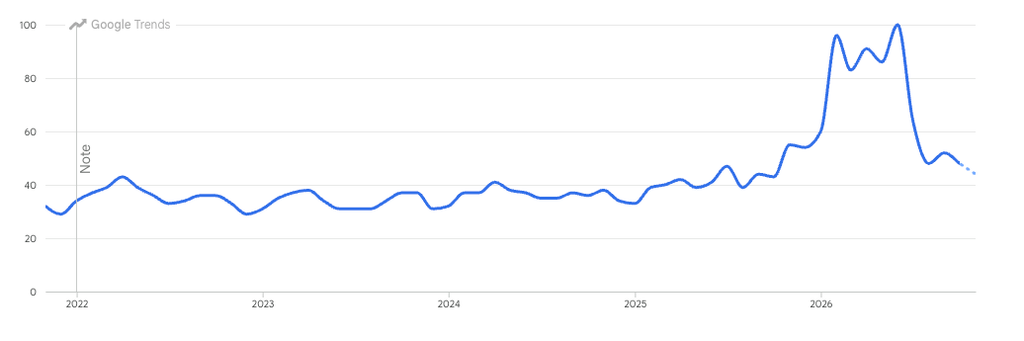
People are burned out by a lot of different things, including the state of the world, the economy, and AI. So why are we adding to the pressures of everyday life by choosing an arbitrary number of books we should read in the next year?
When you set a number-based reading goal and you fall a little bit behind, your reaction is probably to force yourself to read more often, read faster, or read shorter books. That’s harmful because it’s affecting your relationship with reading and making you choose books you might not have chosen otherwise. Sometimes that turns out great, but sometimes the books chosen quickly make reading less enjoyable because they’re not aligning with your interests.
But if you like the structure a reading goal provides, you’re not out of luck. There are plenty of non-stressful reading goals you can set that don’t include a specific number of books.
33 Number-Free Reading Goals That Won’t Stress You Out
They key to setting stress-free reading goals is making them around how you’ll read and what you’ll read instead of a specific number of books or pages.
Here are some ideas to get you inspired.
Time-Based Reading Goals
If you feel like you never have time for reading or just struggle to fit it into your life, try setting a time-based goal. These goals are all about growing your reading habit rather than forcing you to read a certain number of books.
- Read for 15 minutes before bed, right away when you wake up, or on your lunch break.
- Swap one scroll session on your phone for one chapter of your book.
- Put aside one full hour for reading on the weekend.
- If you watch TV often, swap one 30-minute show for a reading session once or twice per week.
- Log your reading sessions for a month to see when you actually read and where you might be able to fit a few more minutes in.
Variety Reading Goals
If you easily get into a reading rut or have a hard time choosing what to read, try a variety goal.
- Pick a book from a genre you usually skip.
- Read a translated book.
- Read a classic that you’ve always meant to read.
- Read a book by a local author.
- Read a nonfiction book about a topic you’re interested in.
- Read another book by an author you loved in the past.
- Read a book set in a place you’ve always wanted to travel to.
- Ask your network for one book recommendation and choose one from that list.
- Read a book in a format you don’t usually choose, such as audiobook or graphic novel.
Depth Reading Goals
Do you often forget what you read or want to connect more deeply with what you’re reading? Try incorporating a few depth goals.
- As soon as you finish a book, immediately write down just 3 sentences (or more, if you feel like it) about the book in a reading journal. How did it make you feel? Was it fun to read?
- Save at least one quote from every book.
- Reread a book you loved in the past.
- Choose a long book that intimidates you and give in to reading it slowly.
- Try annotating a book.
- Pause for 1 minute after you finish each chapter to reflect.
- Set up a buddy read where you and a friend (or multiple friends) read the same book at the same time. Set aside time to meet up and talk about it.
Habit Reading Goals
One of the hardest parts of reading more is developing a reading habit, and then sticking with it. If that’s something you struggle with, try incorporating habit goals.
- Keep a TBR (to-be-read) list so your next pick is always ready when you finish what you’re reading.
- That said, keep your TBR list short so that it’s not overwhelming.
- Get a library card and use the holds list to queue up your next reads.
- Keep a book in your bag or purse and reach for it instead of your phone when a few free minutes pop up.
- When you’re home, keep your book out where you’ll see it and naturally reach for it more often.
- Give yourself permission to put down a book that’s not working for you and pick up another.
- Try listening to audiobooks while running errands or doing chores. Let them count as reading.
Other Non-Stressful Goal Ideas
Here are a few more fun ideas that don’t fit into the categories above:
- Own too many unread books? Make a “read your shelf” challenge where every other book you read has to be from your own shelves.
- To expand your reading horizons, try making a genre list (including only the genres you’ll willingly read) and choosing your next book that way. For example, your list could go:
- Historical fiction
- Memoir
- Fantasy
- Romance
- Sci-fi
- Popular fiction
- Try a “book to screen” goal where you read books that inspired movies, then watch the movie when you’re done.
- Join a local book club.
- Read bestsellers from previous years. When you finish one, go back a year and pick a bestseller from that list.
How to Build a 2027 Reading Goal That Works for You
As you read through that list of goal ideas, what stood out? Did certain ideas sound great, while others made you cringe? Write down the ones that resonated with you to keep as your reading goal, then add anything else that you’d like to include.
To keep your goal from contributing to any burnout or stress, remember to:
- Be gentle with yourself and allow for reading breaks. Didn’t read at all for the past month? No worries, jump back in whenever you’re ready.
- Start where you’re at. If you don’t read at all, don’t set huge goals right away! 10 minutes is enough.
- Mood read. Read what sounds good, when it sounds good. Read two totally different books at once, if that helps!
- Give yourself permission to stop reading a book you’re not enjoying. Forcing yourself through something won’t help you read more!
- Make your goals flexible. Your days, weeks, and months aren’t always the same, so let your reading life flex, too.
- Celebrate what reading adds to your life, not how many pages or books you finish.
How to Track Your Stress-Free Reading Goal
Most book tracking apps ask you to define a goal based on the number of books you’ll read in a year. At Kiveo, we do reading goals differently.
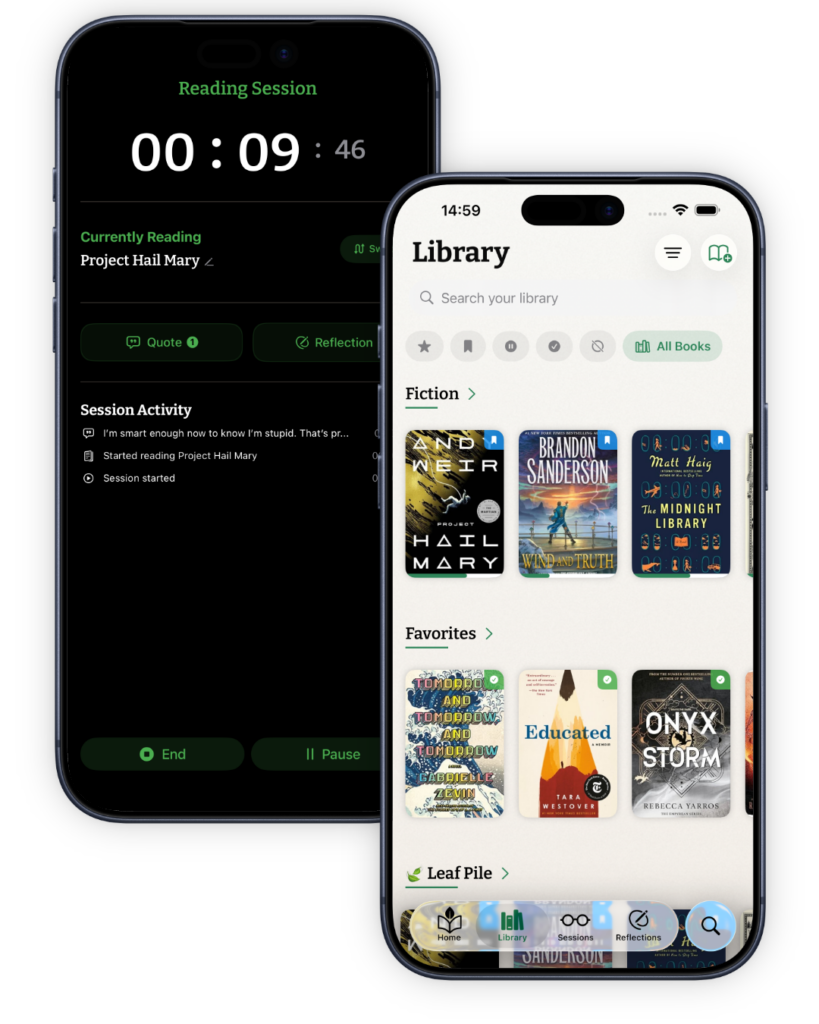
There’s no need to define any kind of goal for tracking to work. Instead, just add your books and track your reading sessions if you want to. There’s no pressure from Kiveo, ever.
You can also use Kiveo to read more deeply. Keep track of quotes, take notes on your favorite passages, or reflect on the book when you’re done reading it.
And keeping track of your TBR list is easy. You can even keep just a few books on your “nightstand” list so you’re not overwhelmed by the entire list.
Kiveo is a book tracking app built for readers who want a quiet place to track, reflect, and read deeply. There are no social feeds and no reading challenge pressures: just a quiet space for you and your books.